Financial Decisions: Nature or Nurture?

(South-East Timber and Damp, LTD, 2018)

Last month, I posted an article titled “MBTI Types and Their Finances: What Do We Know.” This article described how an individual’s personality type (nature) contributes to their attitude towards personal finances. This theory emphasizes that the financial decisions we make are a result of our nature. But could they actually be a result of our environment (nurture)? Or perhaps, a little of both (nature and nurture)? This is a reflection of the age-old question in psychology: Are people a result of their nature or nurture (Cherry, 2019)?

By definition nature refers to all the hereditary factors that make up who we are such as physical appearance and personality (Cherry, 2019). Nurture, refers to the environmental variables that impact who we are such as upbringing, relationships, and culture (Cherry, 2019).

(Cherry, 2019)

In regard to personal finances, our nature could play a significant role in the decisions we make. As outlined in the previously mentioned article, “MBTI Types and Their Finances: What Do We Know” that are four categories of financial decision makers. These categories are based upon each MBTI personality type and their expected approach to personal finances. A summary of each category can be found below:

  • Protectors (ESTJ, ESFJ, ISTJ, ISFJ): By nature, protectors (who make up 38% of the population) are very conservative with their finances (Keyishian, 2020). “They think ahead, make sure their future is taken care of, buy the same brands, and shop at the same stores” (Keyishian, 2020, para. 8).
  • Planners (ENTJ, ENTP, INTJ, INTP): Those who fall within this category are future-focused and tend to concentrate on long-term investing. Planners (who make up about 12% of the population) succeed at evaluating risks and creating contingency plans (Keyishian, 2020). 
  • Pleasers (ENFJ, ENFP, INFJ, INFP): Pleasers (who make up about 12% of the population) tend to take their finances very personally. Those who fall within this category view money as an extension of themselves. Therefore, how they spend it is an expression of their identity (Keyishian, 2020). 
  • Players (ESTP, ESFP, ISTP, ISFP): Players (who make up about 38% of the population) are among the personality types with the highest financial risk (Keyishian, 2020). Characterized as compulsive and carefree, these personalities can end up in financial ruin if they are not cautious. 

Our nurture can also play a significant role in the financial decisions we make. Nurture is a bit different from nature in that it is continually evolving (Barrington, 2010). Our nature does not change, whereas our environment (nurture) is constantly changing (Barrington, 2010). Therefore, if nurture affects our attitude towards personal finances, this attitude can actually change throughout our lives as we have different experiences (Barrington, 2010). For example, if a child is raised in an environment in which their parents are frivolous with money, their childhood and teenage years may be defined by an apathetic attitude towards personal finances. However, when this child becomes an adult and is suddenly faced with adult financial responsibilities (student loans, a mortgage, bills, investing, saving, etc.) they may become more conservative with their finances. Our relationships can also play a role in our financial decisions (Barrington, 2010). If we are friends with people who spend a lot of money, we will likely spend a lot of money too (at least when we are with them). However, if we are friends with people who prefer to save or invest their money as opposed to spending it, we will be more inclined to do the same.

So the question remains: are our financial decisions a reflection of our nature or nurture? As contemporary psychology suggests, it is probably a little of both. As stated in the previous example, people who are friends with spenders instead of savers, have an increased chance of also being a spender. However, if your nature inclines you to save, you may choose to only be with your spender friends when spending money is not involved. For example, instead of going out to eat with these friends, you may suggest going for a hike instead.

It is important to note that psychologists are beginning to realize that asking how much nature or nurture influences a particular trait is not the right approach (Cherry, 2019). The reality is, there is no way to disentangle the myriad of forces that exist (Cherry, 2019). These forces include genetic influences that interact with one another, environmental influences that interact, and the interactions of both hereditary and environmental influences (Cherry, 2019). 

In the end, it does not matter whether nature or nurture determines our financial decisions. As humans, we still have the power to make our own decisions despite our genetic makeup or environment (Barrington, 2010). Through self-determination, we can still break bad spending habits, learn to invest, and increase our savings (Barrington, 2010). 

References:

Barrington, R. (2010). How nature vs. nurture impacts your spending habits. Retrieved from https://www.huffpost.com/entry/nature-nurture-and-saving_b_751780?guccounter=1&guce_referrer=aHR0cHM6Ly93d3cuZ29vZ2xlLmNvbS8&guce_referrer_sig=AQAAAMxzwpr9HlkTR0KSfmF09Iq-3nW0PKseEqvAOZ5xGy0YNR3ABZUADiogDTmjUFL2C-oBU58wAMGPFAH4KNmx5yoKHCFdtwslEjmNLU9zJEAcSvMmD5RIlStuvfJFh2OoJCGjhHkklDn4UmrrYRdN-tDqgVnbziSqEjeb4nRby0Fm

Cherry, K. (2019). The age old debate of nature vs. nurture. Retrieved from https://www.verywellmind.com/what-is-nature-versus-nurture-2795392

Keyishian, A. (2020). What your personality type means for your finances. Retrieved from https://www.themuse.com/advice/what-your-personality-type-means-for-your-finances

Image References:

Keyishian, A. (2020). What your personality type means for your finances. Retrieved from https://www.themuse.com/advice/what-your-personality-type-means-for-your-finances

South-East Timber and Damp, LTD. (2018). Baby-accountant. Retrieved from https://timberanddamp.co.uk/about-us-2/baby-accountant/


How Americans Are Spending Their Stimulus Checks and The Psychology Behind the Covid-19 Pandemic

(Long, 2020)

As a result of the Covid-19 pandemic, economic impact payments are being issued to Americans across the country per the CARE act (Hansen, 2020). In the past three weeks, some 17 million people have filed for unemployment benefits (Internal Revenue Service, 2020). The goal of the economic impact payments or stimulus checks is to lessen some of the economic burden the virus has caused. $1,200 checks are currently being issued to U.S. citizens, permanent residents, or qualifying resident aliens (Internal Revenue Service, 2020). $2,400 checks will be issued to couples married filing jointly (Internal Revenue Service, 2020). Taxpayers will receive a reduced payment if their adjusted gross income (AGI) is between:

  • $75,000 and $99,000 if their filing status was single or married filing separately.
  • $112,500 and $136,500 for head of household.
  • $150,000 and $198,000 if their filing status was married filing jointly.

The amount of the reduced payment will be based upon the taxpayer’s specific adjusted gross income (Internal Revenue Service, 2020). If a taxpayer’s AGI is higher than these amounts, they will likely not receive an economic impact payment (Internal Revenue Service, 2020). Those with qualifying children will receive an extra $500 per child. A qualified child must meet the following conditions:

  • The child is the taxpayer’s son, daughter, stepchild, eligible foster child, brother, sister, stepbrother, stepsister, half-brother, half-sister, or a descendant of any of them.
  • The child is claimed as a dependent on the taxpayer’s return.
  • The child was under age 17 at the end of the taxable year.
  • The child was a U.S. citizen, U.S. national, or U.S. resident alien.
  • The child has a valid SSN or an Adoption Taxpayer Identification Number (ATIN).

As one would expect, many Americans fall within the appropriate category to receive a stimulus check. The question is: how are they spending these checks, and why?

Inconsistent with their typical discretionary spending habits, most Americans are spending their stimulus checks on necessities such as groceries, gas, and pharmacy purchases (Hansen, 2020). A recent Gallup poll revealed that 35% of people plan to use their stimulus money to pay bills, 16% said they will purchase essentials like groceries, and 29% planned to save or invest it (Hansen, 2020). 

(Long, 2020)

Why are so many Americans spending their stimulus payments on necessities and not discretionary items? The answer to this may lie within the mentality many Americans have towards the virus and its implications. Since the beginning, there has been a great deal of fear surrounding the novel coronavirus. Many Americans began panic buying in fear that a lockdown may prevent them from purchasing necessities. This fear and panic in response to the threat of an illness is actually a very normal psychological response. 

Before modern medicine, infectious disease would have been one of the biggest threats to human survival (Robson, 2020). Although the immune system is excellent at destroying pathogenic invaders, these reactions leave humans feeling lethargic (Robson, 2020). During evolutionary times, illness-related lethargy caused stress within tribes (Robson, 2020). The infected were unable to perform essential duties such as hunting, gathering, or child rearing (Robson, 2020). Furthermore, being ill is physiologically expensive (Robson, 2020). The rise in body temperature during a fever, though essential for an effective immune response, results in a 13% increase in the body’s energy consumption (Robson, 2020). During evolutionary times when food was scarce, this would have been a serious burden (Robson, 2020).

With this in mind, it makes sense that our brains are wired to fear infectious disease outbreaks. Additionally, our fear causes us to act more cautiously than we normally do. Therefore, we would expect that Americans are mainly spending their stimulus checks on necessities. With the threat of illness looming and an uncertain future, Americans will inevitably use their resources to put their survival first. 

References:

Hansen, S. (2020). How are Americans spending those $1,200 stimulus checks? Food, gas, and bills. Received from https://www.forbes.com/sites/sarahhansen/2020/04/15/how-are-americans-spending-those-1200-stimulus-checks-food-gas-and-bills/#39bd8472e5a8

Internal Revenue Service. (2020). Economic impact payment information center. Received from https://www.irs.gov/coronavirus/economic-impact-payment-information-center

Robson, D. (2020). The fear of coronavirus is changing our psychology. Retrieved from https://www.bbc.com/future/article/20200401-covid-19-how-fear-of-coronavirus-is-changing-our-psychology

Image References:

Long, H. (2020). The $1,200 stimulus checks are arriving: People are mostly spending them on food. Retrieved from https://www.washingtonpost.com/business/2020/04/14/1200-relief-checks-have-begun-arriving-bank-accounts-people-are-mostly-spending-it-food/

The Effects of The Covid-19 Pandemic- “Panic Buying”

(Savage & Torgler, 2020)

COVID-19 is a disease caused by a type of virus called a coronavirus (WebMD, 2020). A coronavirus is a common type of virus that can cause respiratory tract infections; however, most coronaviruses are not dangerous (WebMD, 2020). Following a December 2019 outbreak in Wuhan, China, the World Health Organization identified a new type of coronavirus. The new virus was: severe acute respiratory syndrome coronavirus 2 (SARS-CoV-2). This is the virus that causes COVID-19. By January, COVID-19 had quickly spread to the United States and other parts of the world. Like most other coronaviruses, COVID-19 spreads through person-to-person contact (WebMD, 2020). When an infected individual coughs or sneezes, they can spray droplets up to six feet away. Inhaling these droplets causes other to become infected with the virus. The virus can also be spread by touching a contaminated surface and then one’s face (eyes, nose, or mouth) (WebMD, 2020). 

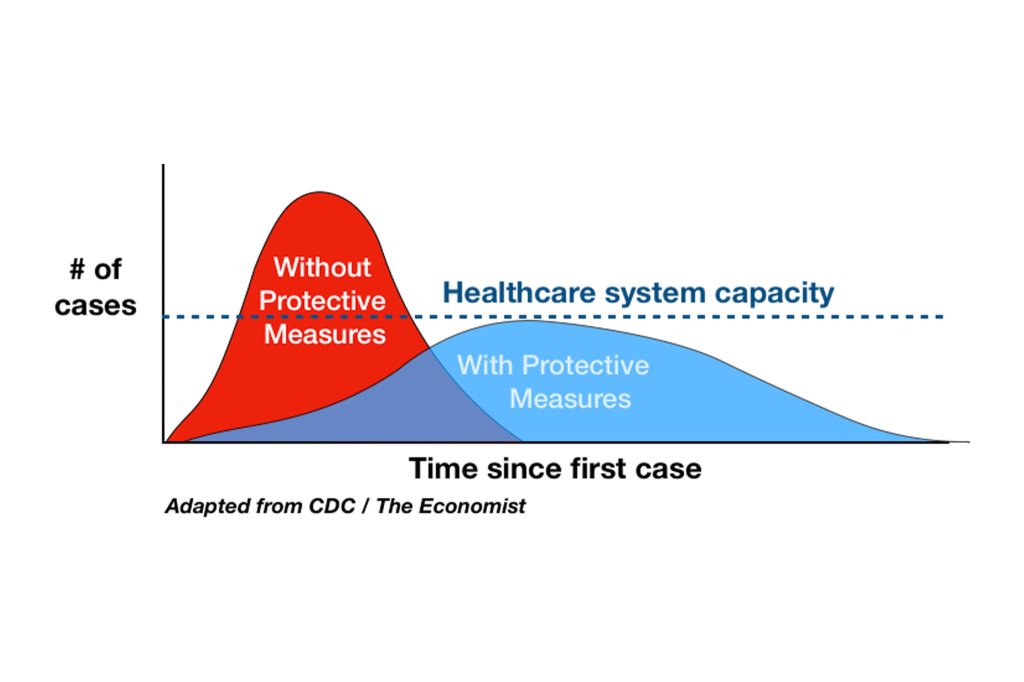
By the end of February, the first cases of community spread COVID-19 began to appear in the United States. “Community spread means spread of an illness for which the source of infection is unknown.” (Center for Disease Control, 2020, para. 2) The beginning of March brought forth increasing cases of the novel COVID-19. By beginning to mid-March, many schools, workplaces, and events began to undergo cancellations in an effort to flatten the curve. Flattening the curve refers to efforts to minimize the spread of a disease. This aids in not overwhelming health care facilities so current cases can be handled effectively (Roberts, 2020). 

(Roberts, 2020)

With cancellations and other restrictions on the rise, Americans began to become more anxious about the implications of a global pandemic. In the United States, customers began visiting stores and clearing the shelves. Toilet paper, paper towels, and hand sanitizer were all gone within days or even hours. Customers also began stocking up on other items such as nonperishables and staples like bread, milk, and meat. This type of purchasing behavior has been coined as panic buying (Wiener-Bronner, 2020). Panic buying is a type of herd behavior. In psychology, herd behavior refers to individuals in a group acting collectively without any centralized direction (Braha, 2012). In economics, panic buying is categorized under consumer behavior theory, the broad field of economic study dealing with explanations for “collective action such as fads and fashions, stock market movements, runs on nondurable goods, buying sprees, hoarding, and banking panics” (Strahle & Bonfield, 1989, p. 567). Overall, panic buying is a group action that tends to worsen as the group grows in size. Those who start panic buying ignite worry in a second tier of consumers who begin panic buying as well. This second tier of panic buyers then inspires a third tier to do the same. The cycle continues until the shelves are bare. 

The implications of such buying practices effect both consumers and retailers. However, retailers are equipped to handle the surge in demand whereas many consumers are not. Supply chains are built to react to disruptions. “A bad crop yield or a factory fire could lead retailers to swap suppliers or turn to alternative products” (Wiener-Bronner, 2020, para. 12). Major supermarket chains and retailers are fortunate enough to have supply networks across the globe. If one supplier is experiencing shortages, they can turn to another (Wiener-Bronner, 2020.)

On the other hand, consumers may find themselves in a sticky financial situation due to panic buying. Reacting on immediate emotions of anxiety and panic, individuals may overextend themselves financially by maxing out credit cards, taking out high-interest loans, or overdrawing their bank accounts. This comes at a time when many consumers are already experiencing interruptions in income due to workplace closures. Filings for unemployment benefits are on the rise as many are losing hours or their job altogether (Schnieder & Zarroli, 2020). The Department of Labor stated, “a number of states specifically cited COVID-19 related layoffs, while many states reported increased layoffs in service related industries broadly and in the accommodation and food services industries specifically, as well as in the transportation and warehousing industry, whether COVID-19 was identified directly or not” (Schnieder & Zarroli, 2020, para. 4). The latest number for unemployment filings was an increase of 70,000 from the previous week. These numbers are expected to increase (Schnieder & Zarroli, 2020). In fact, several states reported that their unemployment claims websites had crashed due to so many people trying to file at once (Schnieder & Zarroli, 2020). 

Overall, this is financially challenging time for many people. The results of panic buying could leave thousands of people with bills they simply cannot afford to pay. This issue is ongoing and only time will tell how, when, and if it can be resolved. 

References:

Braha, D. (2012). Global civil unrests: Contagion, self-organization, and prediction.doi: 10.1371/journal.pone.0048596

Center for Disease Control. (2020). CDC confirms possible instance of community spread COVID-19 in U.S. Retrieved from https://www.cdc.gov/media/releases/2020/s0226-Covid-19-spread.html

Roberts, S. (2020). Flattening the coronavirus curve. Retrieved from https://www.nytimes.com/2020/03/11/science/coronavirus-curve-mitigation-infection.html

Schnieder, A., & Zarroli J. (2020). Filings for unemployment benefits rise as coronavirus hits job market. Retrieved from https://www.npr.org/2020/03/19/818234501/filings-for-unemployment-benefits-rise-as-coronavirus-hits-job-market

Strahle, W. M., & Bonfield, E. H. (1989). Understanding consumer panic: A sociological perspective. Advances in Consumer Research, vol 16. 

WebMD. (2020). Coronavirus disease 2019 (COVID-19). Retrieved from https://www.webmd.com/lung/what-is-covid-19#1

Wiener-Bronner, D. (2020). How grocery stores restock shelves in the age of coronavirus. Retrieved from https://www.cnn.com/2020/03/20/business/panic-buying-how-stores-restock-coronavirus/index.html

Image References:

Roberts, S. (2020). Flattening the coronavirus curve. Retrieved from https://www.nytimes.com/2020/03/11/science/coronavirus-curve-mitigation-infection.html

Savage, D., & Torgler, B. (2020). Here’s the difference between “panic buying” and reasonably preparing for a crisis. Retrieved from https://www.sciencealert.com/reasonable-preparations-before-a-crisis-isn-t-panic-buying-here-s-the-difference

MBTI Types and Their Finances: What Do We Know?

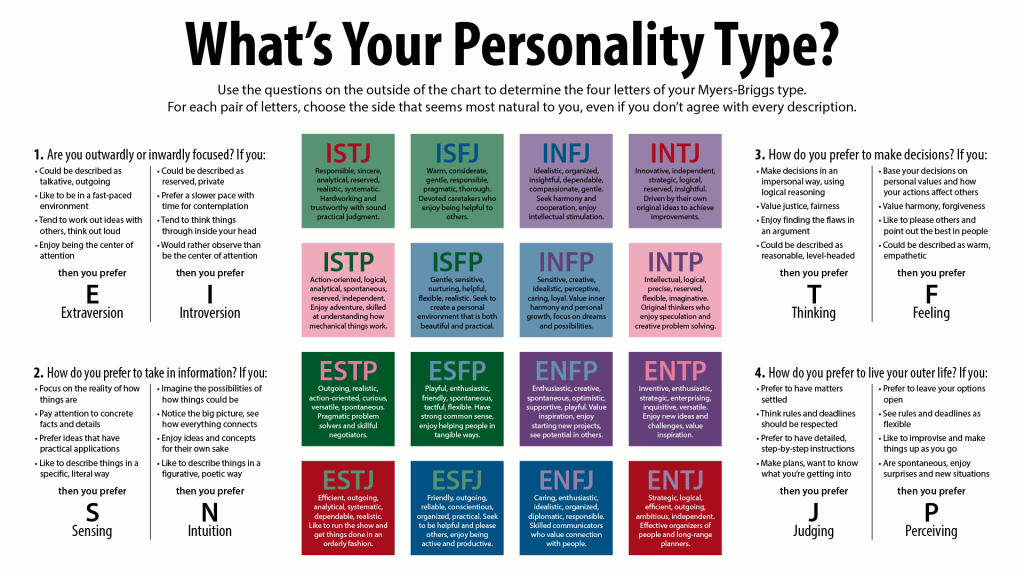
Developed by Katherine Briggs and Isabel Myers, the Myers-Briggs Type Indicator (MBTI) is a self report questionnaire which characterizes an individual’s personality type through how they perceive the world and make decisions (The Myers-Briggs Foundation, 2014). The MBTI is based on the theories of Carl Jung. Jung speculated that people experience the world using four functions: sensation, intuition, feeling, and thinking. Jung’s theory states that one of the four functions is dominant within an individual most of the time (The Myers-Briggs Foundation, 2014). The MBTI uses four categories to define one’s personality: introversion or extroversion, sensing or intuition, thinking or feeling, and judging or perceiving. These categories create sixteen unique personality types (The Myers-Briggs Foundation, 2014). These sixteen personality types and their traits are described in the image below:

(Beech, 2014)

Each of these personality types “…have specific preferences in the way [they] construe [their] experiences, and these preferences underlie [their] interests, needs, values, and motivation” (Kaplan & Saccuzzo, 2009, p. 502) Therefore, one would expect that each of these MBTI types have a different relationship with their finances. Keyishian, 2020 estimated a pattern in how each of these different personality types would handle their personal finances. Each of these MBTI types’ patterned behavior was placed within a relevant category. The categories were: protectors, planners, pleasers, and players (Keyishian, 2020). A description of each category and a list of its respective personality types can be found below:

PROTECTORS

  • ESTJ
  • ESFJ
  • ISTJ
  • ISFJ

By nature, protectors (who make up 38% of the population) are very conservative with their finances (Keyishian, 2020). “They think ahead, make sure their future is taken care of, buy the same brands, and shop at the same stores” (Keyishian, 2020, para. 8). Although this may sound like a sensible approach to handling one’s finances, protectors often experience a lot of stress related to their money. For example, any sort of risk related to a protector’s finances is extremely anxiety-inducing. Scheduling a vacation or investing in the stock market can be difficult for protectors, even if it benefits them in the long-run (Keyishian, 2020). Furthermore, protectors loath unanticipated change such as spending money on an unplanned repair. To avoid any undue stress, it is recommended that protectors keep an emergency fund. Having some money set aside for a rainy day will likely ease any anxieties about unplanned spending (Keyishian, 2020).

PLANNERS

  • ENTJ
  • ENTP
  • INTJ
  • INTP

Those who fall within this category are future-focused and tend to concentrate on long-term investing. Planners (who make up about 12% of the population) succeed at evaluating risks and creating contingency plans (Keyishian, 2020). They are also great at big-picture thinking and building plans according to their vision. However, sometimes those within this category are so focused on the future that they miss important opportunities in the present. In other words- analysis paralysis (Keyishian, 2020). Many planners make great money but are so focused on long-term savings that they never get to enjoy their earnings. It is recommended that planners select a portion of their income to divert immediately to long-term savings, and select another portion to divert to indulgences today (Keyishian, 2020).

PLEASERS

  • ENFJ
  • ENFP
  • INFJ
  • INFP

Pleasers (who make up about 12% of the population) tend to take their finances very personally. Those who fall within this category view money as an extension of themselves. Therefore, how they spend it is an expression of their identity (Keyishian, 2020). Through their money, these personality types either want to please themselves or others. Unfortunately, this means pleasers are often taken advantage of in terms of their finances (Keyishian, 2020). Those who recognize a pleaser’s desire to put others’ needs before their own will likely leave a pleaser broke. Even pleasers more focused on fulfilling their own needs can fall into this trap. For example they may overspend “because I’m worth it” (Keyishian, 2020, para. 19). It is advised that these personality types avoid those who may manipulate their financial decisions (Keyishian, 2020).

PLAYERS

  • ESTP
  • ESFP
  • ISTP
  • ISFP

Players (who make up about 38% of the population) are among the personality types with the highest financial risk (Keyishian, 2020). Characterized as compulsive and carefree, these personalities can end up in financial ruin if they are not cautious. Players love being able to freely react to the moment.  Although this can be a dangerous trait, in the right circumstance, it can be incredibly entrepreneurial as well. With their resourcefulness, can-do attitude, and the help of an accountant, many players can become superb entrepreneurs (Keyishian, 2020).

References:

Kaplan, R. & Saccuzzo, D. (2009). Psychological testing: Principles, applications, and issues. 

Keyishian, A. (2020). What your personality type means for your finances. Retrieved from https://www.themuse.com/advice/what-your-personality-type-means-for-your-finances

The Myers-Briggs Foundation. (2014). MBTI basics. Retrieved from https://www.myersbriggs.org/my-mbti-personality-type/mbti-basics/home.htm?bhcp=1

Image References:

Owens, M. (2015). Believe it or not, your personality type can predict how much you’ll earn, how much far you’ll rise, and whether you’ll love your job. Retrieved from https://www.truity.com/blog/personality-type-career-income-study-2015

Beech, J. (2014). What’s your personality type? Retrieved from https://creativecommons.org/licenses/by-sa/3.0/

The Icarus Paradox and The Overconfidence Effect

In a sentence, the Icarus Paradox is a business phenomenon that describes why many businesses abruptly fail after years of success. The theory, coined by Danny Miller, derives its name and essence from Greek mythology; specifically, from the story of Icarus. In Greek mythology, Icarus, son of the master craftsmen Daedalus, escapes imprisonment with his father by way of wings constructed from feathers and wax (Miller, 1990). Despite his father’s warnings to avoid flying too close to the sun, Icarus, in his hubris, ignores the warnings. He flies too close to the sun and his wax wings melt, causing him to drown in Aegean Sea (Miller, 1990). The paradox of this myth is that the very wings which caused Icarus’s success, led him to his demise. As easily as an asset can cause a businesses’ success, it can dually cause its failure. This is especially the case when initial success is handled recklessly through over-confidence, arrogance, and conceit. This is the essence of the Icarus Paradox (Miller, 1990). 

Miller describes four common trajectories of the Icarus Paradox: focusing, venturing, inventing, and decoupling. The focusing trajectory turns craftsmeninto tinkerers. Organizations who once had detail-oriented, quality-driven engineers with airtight operations, become obsessive, rigidly-controlled firms whose offerings become perfect, but irrelevant (Miller, 1990). The venturing trajectory turns buildersinto imperialists. Organizations who were once growth-driven and entrepreneurial, become greedy and reckless, expanding into businesses they know nothing about (Miller, 1990). The inventing trajectory turns pioneersinto escapists. Once flexible organizations with state-of-the-art products become wasteful firms squandering resources on grandiose inventions (Miller, 1990). Finally, the decoupling trajectory turns salesmeninto drifters. Organizations who began with excellent marketing departments and powerful brand names turn into aimless, bureaucratic firms with stale offerings (Miller, 1990). Each of these trajectories is in line with the overall theory of the Icarus Paradox. A successful strategy when coupled with poor planning, over-confidence, and greed quickly turns an asset into a liability and ultimately, a failure. 

How is it possible for organizations to overestimate their abilities so much, that their once successful strategies become their demise? The answer may lie within a psychological theory called the overconfidence effect. The overconfidence effect measures the difference between “what people really know and what they think they know” (Dobelli, 2013, para. 3). Psychologists Howard Raiffa and Marc Albert dubbed this term after interviewing hundreds of individuals as part of a research study. The psychologists would ask participants unusual questions such as, “what is the total egg production in the U.S.” or “what is the number of physicians listed in the yellow pages?” Subjects could answer with any number they deemed appropriate for the given question (Dobelli, 2013). Raiffa and Albert estimated that participants would be somewhere in the range of 2% removed the actual answer. To their surprise, subjects were actually closer to 40% removed from the real answer (Dobelli, 2013). This research suggested that as humans, we tend to have a distorted view on our own capabilities. Time and time again, individuals can be seen overestimating their knowledge and skills. This phenomenon is seen in a variety of areas, most notably, the stock market (Dobelli, 2013).Surprisingly, experts tend to suffer even more from the overconfidence effect than the average person. “If asked to forecast oil prices in five years’ time, an economics professor will be as wide of the mark as a zookeeper will. However, the professor will offer his forecast with certitude” (Dobelli, 2013, para. 3).

When applied to the overconfidence effect, the Icarus Paradox and its cause becomes much clearer. If a particular business strategy is successful, upper level management, obviously, wants to repeat its effect. However, with new-found confidence in the strategy’s abilities, management tends to grossly overestimate its capacity for success. This is how so many organizations inevitably overextend themselves. They have an unreasonable amount of confidence in a strategy that was successful perhaps once or twice with different variables effecting its outcome. It would be wise of business managers to be more skeptical of their success and learn to adjust strategies to fit the ever-changing needs of their organization. 

References:

Dobelli, R. (2013). The overconfidence effect. Retrieved from https://www.psychologytoday.com/us/blog/the-art-thinking-clearly/201306/the-overconfidence-effect

Miller, D. (1990). The icarus paradox: How exceptional companies bring about their own downfall. HarperBusiness.

First Post

Welcome! This is the first post for the blog: “Applying Psychology To Financial Decisions.” In the coming months I will be posting bi-weekly articles on the topics of finance and psychology and how the two subjects relate. My first real post will be coming sometime this week. Stay tuned!

Design a site like this with WordPress.com
Get started